In Waterford, the ground tells a story shaped by the River Suir and the last glaciation. You see it on sites from the North Quays to the suburbs beyond the ring road: dense boulder clay overlying limestone bedrock, with pockets of soft alluvium tucked into the river valley. A raft foundation often becomes the logical choice when the bearing capacity varies across the footprint or when differential settlement needs to be controlled. The design approach we apply draws on detailed site investigation data, and in Waterford we typically combine it with CPT testing to map the transition from the stiff glacial till to the weaker estuarine silts that appear near the tidal reaches of the Suir. Raft analysis here isn't a generic exercise. It has to account for the exact depth to bedrock, which in parts of Ferrybank can be less than two metres, while in the city centre it drops below eight metres. These contrasts demand a ground model that is updated with every borehole, not one that's copied from a previous job on the opposite bank.
A raft foundation in Waterford must respond to the Suir valley geology: stiff till on one side, compressible alluvium on the other—and sometimes both within the same site.
Technical details of the service in Waterford
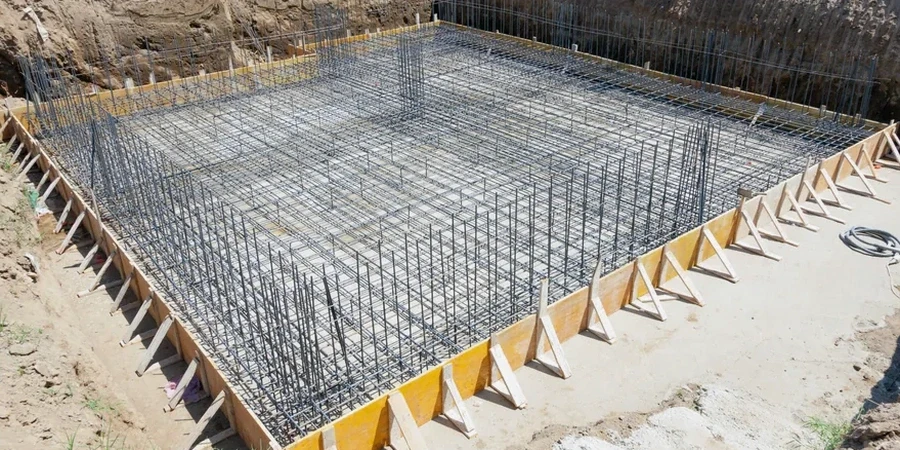
Local geotechnical conditions in Waterford
The rig that arrives on a Waterford site is typically a tracked CPT truck or a borehole crawler, and the first thing the operator checks is the thickness of the soft layer above the till. If that layer is underestimated, the raft ends up bearing on a compressible crust that wasn't properly accounted for in the stiffness model. The consequence is rarely catastrophic failure, but it shows up as excessive differential settlement within the first two years, cracking partition walls and binding doors. Another risk specific to the Suir floodplain is seasonal groundwater fluctuation. A raft designed without a drainage blanket or with overly optimistic buoyancy assumptions can track record uplift pressures that weren't in the original calculation. The design needs to be cross-checked against the worst-case water table recorded in the nearest OPW monitoring well, not just the level measured on the day of the investigation.
Our services
The raft design we deliver in Waterford is built around the ground conditions found on each site. The following works are part of the process we apply locally:
Raft geometry and depth optimisation
We adjust the footprint and thickness of the mat to balance excavation cost against concrete volume, working within the bearing strata identified in the site investigation.
Settlement analysis under service loads
Using elastic half-space and layered soil models calibrated to CPT and laboratory data, we calculate total and differential settlement across the raft.
Ground improvement integration
Where the upper soils are too soft, we design the interface between the raft and treated ground—stone columns or rigid inclusions—to meet the settlement criteria.
Construction stage support
We deliver reinforcement detailing guidance, pour-sequence recommendations, and field review during excavation to confirm that the exposed ground matches the design assumptions.
Questions and answers
What does raft foundation design cost for a typical house in Waterford city?
For a single residential raft on a standard Waterford site, the design fee generally falls between €930 and €1,450. For larger or more complex projects—such as a multi-unit block on soft alluvium near the river—the cost can range from €1,800 to €3,430, reflecting the additional analysis and reporting required.
When is a raft better than strip footings in Waterford?
A raft becomes the better option when the bearing stratum is variable or when the allowable bearing pressure drops below about 75 kPa. In Waterford, this often happens on the north side of the Suir where soft silts overlie the till, or on made-ground sites where isolated footings would track record uneven settlement.
How do you verify the ground conditions under a raft during construction?
Once the excavation reaches formation level, we inspect the exposed soil and compare it with the borehole logs and CPT profiles from the investigation. If the material is softer than expected, we carry out a quick plate load or dynamic cone test before the blinding concrete is poured, and the raft design is adjusted if necessary. More info.